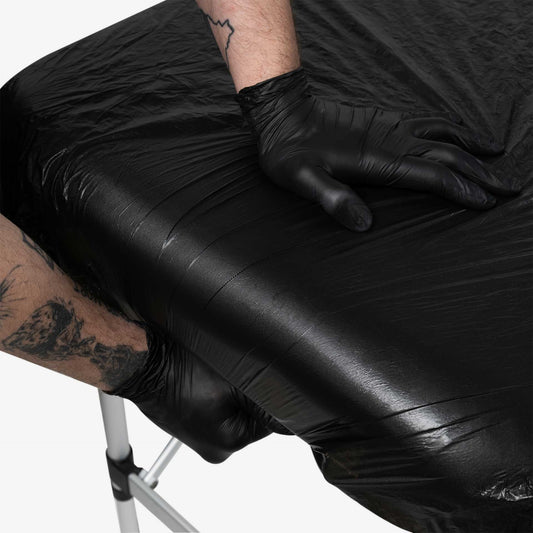
Tattoo healing is one of the most important stages of the tattooing process, yet it's often taken for granted. You can execute your best work perfectly, but if the healing process isn't properly managed, all that effort can be compromised. This is where the difference lies between a tattoo that lasts a lifetime and one that almost needs to be redone over time. Discover the products that truly make a difference.
The Stages of Tattoo Healing: What to Use at Each Stage
Each stage requires the right product, and it's important to know what to apply and when.
Immediately after the session, a transparent protective film (Second Skin) acts like a second layer of skin. It is breathable, allows moisture vapour to escape and provides a barrier against water, bacteria and dirt. It also prevents clothing from rubbing against the tattoo during the first few days.
Throughout the healing process, it's important to use a pH-neutral cleansing soap or foam that gently removes excess ink and plasma without irritating the skin, which is naturally sensitive after tattooing.
After removing the protective film, a moisturising tattoo aftercare cream helps nourish the skin and prevent the formation of thick scabs that can affect pigment retention.
Vaseline or a Dedicated Tattoo Aftercare Cream?
This is one of those basic mistakes that, if you're still making it, you really need to reconsider.
Vaseline is a thick petroleum-derived product that creates an occlusive barrier, trapping moisture and heat against the skin. When applied excessively to a fresh tattoo, it can interfere with the healing process and potentially increase the risk of complications.
A dedicated tattoo aftercare cream is designed to provide appropriate hydration, soothe irritation and help prevent the formation of thick scabs that may affect pigment retention when they fall off.
The difference is real. When the healing process is properly managed, you're one step closer to achieving the best possible result for your tattoo.
How to Prevent Scabs from Ruining Your Tattoo's Colour
Thick scabs can form when the skin becomes excessively dry or irritated. When they fall off, they may take some pigment with them, leaving uneven areas in the tattoo's colour.
Prevention starts with getting the basics right: gentle cleansing, thin layers of aftercare cream (applying too much can over-moisturise the skin and be just as harmful as applying too little), and never, under any circumstances, picking or pulling at peeling skin.
Let your skin do its natural work of recovering from the tattooing process. Your role is simply to give it the right conditions to heal properly.
Buy Tattoo Healing Products at Piranha Supplies
Don't take something this important lightly. You don't want your tattoos to become known for poor pigment retention or healing complications. Quite the opposite. Prioritise hygiene, choose the right tattoo aftercare cream, work with trusted brands and protect your art! Proper tattoo healing is essential for maintaining the quality of your work and building long-lasting relationships with your clients.
Choosing a selection results in a full page refresh.